
RAAC strengthening: keep the building, lose the replacement bill
Structured Carbon strengthens RAAC planks in place with bespoke carbon fibre (CFRP), designed to the exact capacity your roof or floor needs and manufactured in the UK. The building stays open. The replacement programme stays on the shelf.
- Across the RAAC tenders we cost, strengthening frequently comes in well below 15 per cent of full replacement
- Survey, engineering, manufacture, installation and monitoring from one named team
- Designed and signed off by a chartered structural engineer who specialises in RAAC
Prefer to talk? Call +44 118 430 8430 and speak to the people who do the work.
Thank you, we have your enquiry
One of the team will come back to you within one working day. If it is urgent, call +44 118 430 8430.
The default advice is to prop it, then plan to rip it out. There is a better route.
Reinforced Autoclaved Aerated Concrete (RAAC) was used in the roofs, floors and walls of schools, hospitals, universities, courts, theatres and offices from the 1950s to the 1990s. It is lighter and weaker than dense concrete, it takes on water, and its planks can fail suddenly at the bearings. When it is found, the standard response is to make the area safe with props and then plan a replacement roof.
Replacement is the most expensive and disruptive option on the table. It means decanting people, temporary classrooms or wards, months or years of programme, and a bill that runs into the millions for a single building. For many roofs it is also unnecessary.
Where the structural assessment supports it, we strengthen the existing planks in place with carbon fibre reinforced polymer. The CFRP is designed to restore the capacity that particular roof needs, bonded to the planks, and left to carry load for decades. Nothing is stripped out, so the building carries on being used around the work.
- Keeps the building open. Work is phased and done in holidays, nights or weekends, so classrooms, wards and offices stay in use.
- Costs a fraction of replacement. Across the tenders we cost, a bespoke scheme frequently lands well below 15 per cent of the replacement figure.
- Engineered to the roof, not a catalogue. Each plank gets the reinforcement it needs, no more and no less, because the design starts from a survey of that plank.
- Immune to the thing that hurt the RAAC. CFRP does not corrode or absorb water, and the structure is monitored after installation.
What each route means for the people who use the building
Both routes make the structure safe. They differ on almost everything else. Figures below describe what we typically see on the RAAC tenders we cost and price; every building is assessed and priced on its own survey.
| Full replacement | CFRP strengthening in place | |
|---|---|---|
| Building use | Areas closed, occupants decanted to temporary accommodation or other sites | Building stays in use, work phased room by room and out of hours |
| Programme | Typically many months to years, including design, procurement and the strip-out | Measured in months. Short, intensive holiday or weekend programmes are normal |
| Cost | The full roof, plus decant, temporary accommodation and loss of use | Frequently well below 15 per cent of the replacement figure on the tenders we cost |
| Disruption | Strip-out, cranes, weather exposure, noise and dust across the whole area | Localised work at the soffit, no strip-out, no open roof |
| Waste and carbon | Existing planks to landfill, a new roof manufactured and transported | Existing structure retained, CFRP made to order for the roof |
| Afterwards | New roof, new warranty, old problem gone | Strengthened roof, monitored so its performance is known, not assumed |
Some planks are beyond strengthening and should be replaced. That is a survey finding, not an assumption, and it is why every scheme starts with assessment rather than a quote for the whole roof. Read the full comparison in our guide to RAAC remediation versus replacement.
The RAACSafe™ Protocol: five stages, one team
Survey and structural engineering are usually two separate firms, and RAAC falls into the gap between them. We close that gap. The person who surveys the roof and the engineer who designs the fix work side by side, and the same partnership sees the CFRP made, installed and monitored. Together they ensure safe, quality-controlled delivery throughout.
Assess
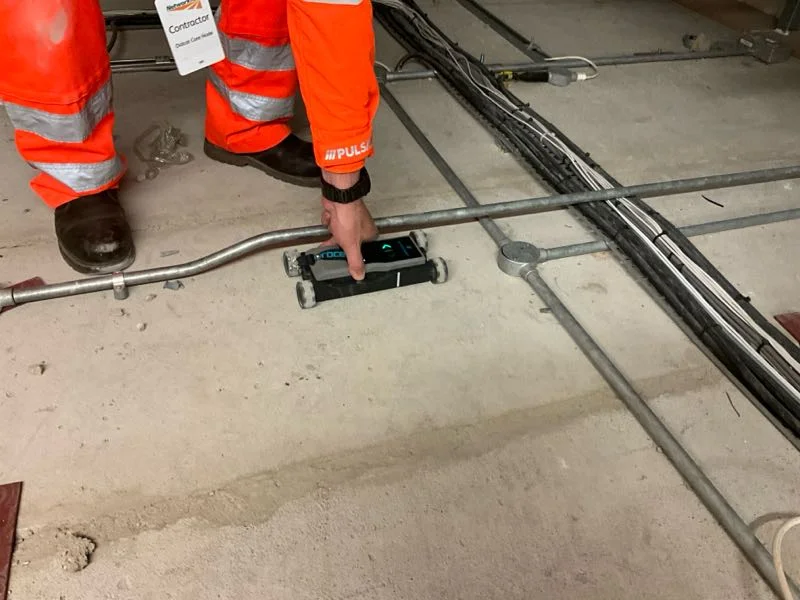
Non-destructive survey, scanning and condition assessment of every plank, bearing and the reinforcement inside them. This is the data the whole scheme is built on.
Neil Smuts, MCIOB MInstNDT FRCSPDesign
Structural calculations and a bespoke CFRP strengthening scheme engineered to the exact capacity required, plank by plank, inside or outside code where the assessment supports it.
John Staves, CEng FIStructE MIoDManufacture
The CFRP is made in the UK to that design, for any size of project, so each roof gets what it needs rather than a stock product.
UK manufactureInstall and Monitor
Installed in place with the building in use, then monitored so the strengthened structure's performance is confirmed rather than assumed.
Structured Carbon site teamRAAC strengthening by building type
The engineering is the same. What changes is who the building serves and what closing it would cost them. Each page below covers the sector's specific constraints, from term-time working in schools to live clinical areas in hospitals.
Schools
Academies, trusts and local-authority schools. Holiday programmes that keep classrooms open in term time.
RAAC in schoolsHospitals and NHS estates
Strengthening around live wards and theatres without losing clinical capacity to a decant.
RAAC in hospitalsUniversities and colleges
Teaching blocks, halls and laboratories kept in use across the academic year.
RAAC in universitiesPublic sector buildings
Courts, libraries, town halls, leisure centres and council estates with RAAC roofs.
RAAC in public buildingsCommercial buildings
Offices, warehouses, retail and industrial units where closure means lost revenue.
RAAC in commercial buildingsDefence estates
MOD and operational defence facilities where continuity of use is the priority.
RAAC in defence buildingsTransport and infrastructure
Railway buildings, depots, airports and critical national infrastructure.
RAAC in transportSport and leisure
Sports halls, swimming pools and community buildings with wide-span RAAC roofs.
RAAC in leisure buildingsOccupied and live buildings
Any estate that cannot shut: how the work is phased around the people inside.
RAAC in occupied buildingsNamed RAAC specialists, not a subcontracted chain
Structured Carbon is a specialist partnership built entirely around RAAC. The two people below survey, assess, calculate and design every scheme. You will deal with them, not with an account manager.
Neil Smuts, MCIOB MInstNDT FRCSP
RAAC surveyor and NDT specialist. President, UK Concrete Scanning StandardNeil leads the survey, scanning and monitoring side of every project. He is President of the UK Concrete Scanning Standard (UKCSS), the national standard for concrete scanning, a member of the Chartered Institute of Building and the Institute of NDT, and a Fellow of the Register of Concrete Scanning Professionals. Within the RAACSafe Protocol he owns the Assess and Monitor stages: establishing the true condition of the structure before any work, and confirming its performance afterwards.
Neil Smuts on LinkedInJohn Staves, CEng FIStructE MIoD
Chartered structural engineer. Design and calculationsJohn is a chartered structural engineer and one of the UK's leading specialists in RAAC. He carries out all of the structural calculations and designs the bespoke CFRP strengthening scheme for every Structured Carbon project. John received both the Regional and the National Innovation Award at the HSBC Commercial Banking and Federation of Small Businesses Small Business Growth Awards for his work on RAAC repair. Within the RAACSafe Protocol he owns the Design stage, turning the survey into a buildable, fully engineered scheme.
John Staves on LinkedInIs your building already on the list?
We maintain a register of 199 UK sites publicly identified as containing RAAC, drawn from Department for Education, NHS and other published sources, organised by area. These are buildings identified in the public domain, not yet worked on by us. Use it to check your estate, then read what strengthening rather than replacement would mean in your region.
RAAC remediation by region
- Aberdeenshire
- Berkshire
- Bridgend
- Bristol
- Buckinghamshire
- Cambridgeshire
- Cheshire
- County Durham
- Cumbria
- Derbyshire
- Devon
- Dorset
- Dundee
- East Lothian
- East Riding of Yorkshire
- East Sussex
- Edinburgh
- Essex
- Glasgow
- Greater Manchester
- Hampshire
- Hertfordshire
- Isle of Wight
- Kent
- Lanarkshire
- Lancashire
- Leicestershire
- Lincolnshire
- London
- Luton
- Merseyside
- Norfolk
- North Yorkshire
- Northamptonshire
- Nottinghamshire
- Oxfordshire
- Shropshire
- Somerset
- South Yorkshire
- Staffordshire
- Suffolk
- Surrey
- Tyne and Wear
- Warwickshire
- West Midlands
- West Sussex
- West Yorkshire
- Worcestershire
Read before you commit to a replacement programme
RAAC remediation cost
What drives the price of strengthening, what replacement really costs once decant and loss of use are counted, and how the two compare.
Read the cost guideRemediation vs replacement
When strengthening is the right call, when it is not, and the questions to ask before anyone quotes for a new roof.
Compare the routesRAAC life extension
How CFRP and monitoring add decades of safe service life to planks that would otherwise be condemned.
Extend the life of RAACCFRP strengthening explained
What carbon fibre reinforced polymer is, why it suits RAAC, and how a bespoke scheme is designed to the capacity each plank needs. Ours is the UK's first CFRP system designed specifically for RAAC, insurer approved and extensively tested.
About CFRPThe numbers from our tenders
Worked figures from the RAAC tenders we cost, including the roof priced at £40 million to replace and under £4 million to strengthen.
See the numbersRAAC remediation
The full picture: assessment, propping, strengthening and monitoring, and where replacement still has a place.
About RAAC remediationRAAC strengthening, answered straight
Does RAAC always have to be replaced?
No. Where a structural assessment supports it, RAAC planks can be strengthened in place with CFRP designed to the capacity the roof or floor actually needs. Replacement remains the right answer for some planks, which is why every scheme starts with a survey and an engineering assessment rather than an assumption.
How much does RAAC strengthening cost compared with replacement?
Across the RAAC tenders we cost, a bespoke CFRP scheme engineered for that exact roof frequently comes in at well below 15 per cent of the cost of full replacement. On one tender, a roof costed at around £40 million to replace was priced for strengthening at under £4 million. Every building is different, so we price from the survey, not from a rate card. Our cost guide goes through the drivers.
Can the building stay open during the work?
In most cases, yes. Nothing is stripped out, so the work can be phased room by room and carried out in holidays, at night or at weekends. Schools, hospitals and offices can usually stay in use around the programme rather than decanting to temporary accommodation.
What is the RAACSafe Protocol?
RAACSafe is our five-stage process for RAAC: Assess, Design, Manufacture, Install and Monitor. Neil Smuts surveys, scans and assesses the RAAC, John Staves designs a bespoke CFRP scheme to the exact capacity required, the CFRP is manufactured in the UK to that design and installed in place, and the strengthened structure is monitored afterwards.
Who designs and signs off the strengthening scheme?
John Staves, a chartered structural engineer (CEng FIStructE) and one of the UK's leading specialists in RAAC, carries out the structural calculations and designs every CFRP strengthening scheme. The survey, scanning and monitoring data he designs from is produced by Neil Smuts (MCIOB, MInstNDT, FRCSP), President of the UK Concrete Scanning Standard.
How do I find out whether my building has RAAC?
RAAC was used widely in flat roofs, floors and walls of public buildings built between the 1950s and the 1990s. Our RAAC confirmed buildings register lists 199 publicly identified sites by area. If your building is from that period and has not been surveyed, a non-destructive survey confirms whether RAAC is present and what condition it is in.
Have RAAC? Talk to the people who will actually do the work.
Send us the building type, where it is and what you know so far. A RAAC surveyor and a structural engineer will tell you, honestly, whether strengthening is a realistic option and what the next step should be.