
RAAC Assessment in Reading
Finding RAAC in a building in Reading is the start of a decision, not the end of one. The RAAC assessment is the engineering judgement that follows: a panel-by-panel classification by John Staves (CEng FIStructE, MIoD), a chartered structural engineer and one of the UK's leading specialists in RAAC, based on the survey and scanning carried out by Neil Smuts (MCIOB, MInstNDT, FRCSP), President of the UK Concrete Scanning Standard and a Fellow of the Register of Concrete Scanning Professionals, and a clear statement of what should happen next.
- Assessed by John Staves, CEng FIStructE MIoD, a chartered engineer who specialises in RAAC
- Built on survey and scanning evidence from Neil Smuts, MCIOB MInstNDT FRCSP
- Panel-by-panel: what can stay in use, what needs propping, what needs monitoring
- Strengthen-or-replace answered honestly, with the cost picture
Based in Finchampstead, Wokingham. Reading is local to us.
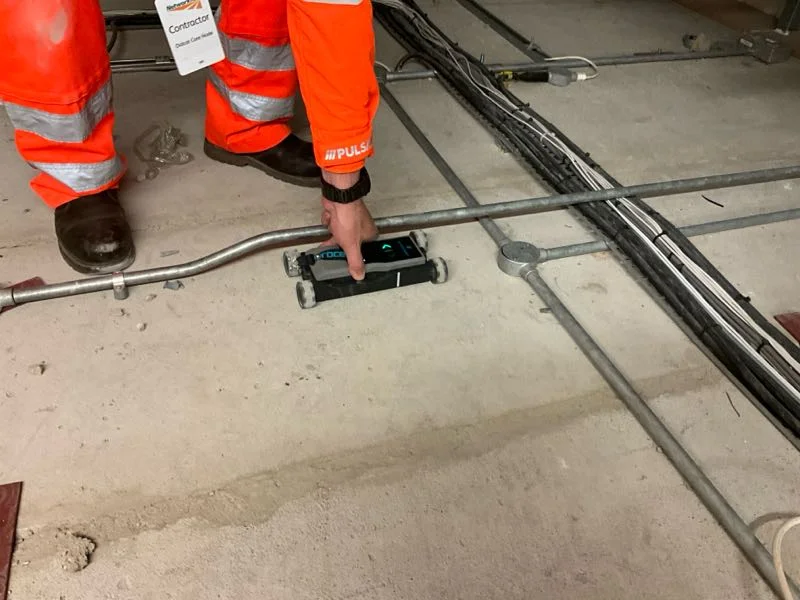
How John Staves assesses RAAC
The assessment takes the survey record for the building in Reading, panel by panel, and turns it into engineering conclusions. Each panel is classified on its condition, bearing, cracking, deflection and exposure to water, with reference to the current Institution of Structural Engineers guidance on RAAC. The assessment states which panels can remain in use as they are, which need propping or restricted use now, which should be monitored, and which need intervention.
It then answers the question the budget depends on: can this roof be strengthened in place, or does it need to come out? Where strengthening is viable, the assessment says so and sets out what the scheme would need to achieve.
Strengthen or replace: the question the assessment must answer
RAAC is not a single condition. Planks that have been kept dry, bear properly on their supports and show no deflection behave very differently from planks that have been wet for decades or sit on a bearing that is too short. The assessment separates the two for your building in Reading, and it is the difference between them that decides whether strengthening in place is on the table. Across the RAAC tenders we cost, a bespoke CFRP scheme engineered for that exact roof frequently comes in at well below 15 per cent of the cost of full replacement. On one tender, a roof costed at around £40 million to replace was priced for strengthening at under £4 million.
Where it is, the same team designs and delivers it. Where it is not, we say so.
From inspection to a management and remediation strategy in Reading
Which school RAAC surveyors can also provide a management and remediation strategy following inspection? The answer is a team where the surveyor, the inspecting engineer and the designer of the strengthening are the same people. For schools, academy trusts, NHS estates, councils and building owners in Reading, the engineering inspection and structural assessment end in a written strategy: what is managed, what is monitored, what is strengthened, and in what order. Priced per building; a visual survey alone starts from £395.
Reading and the RAAC era
Reading sits in the Reading Borough Council area, close to Caversham, Woodley and Earley. It is the largest town in the Thames Valley, with Reading station, the Royal Berkshire Hospital, the University of Reading and the business parks at Green Park and Thames Valley Park, and it holds a large stock of 1960s and 1970s civic, education and commercial buildings, including the flat-roofed school, college and public buildings of that era. That is the building stock the RAAC assessment question applies to: anything with a flat or shallow roof from the 1950s to the mid 1990s, whether school, clinic, hall, leisure centre or office.
A practical starting point in Reading
If you are responsible for buildings in Reading, start with a list. Which of them have flat or low-pitched roofs, and which were built or extended between the 1950s and the mid 1990s? In the Reading Borough Council area that will usually take in a large stock of 1960s and 1970s civic, education and commercial buildings, including the flat-roofed school, college and public buildings of that era. Anything on that list that has never had RAAC ruled in or out is a candidate for a RAAC assessment. Send us the list and we will tell you which buildings justify a visit, and which can be cleared from the desk with drawings alone.
What you receive
You get one document you can act on and put in front of a board, a trust, a governing body or an insurer: the classification of every panel, what must happen now, what should be monitored, and whether the roof is a candidate for strengthening in place. It is signed by John Staves (CEng FIStructE, MIoD), a chartered structural engineer and one of the UK's leading specialists in RAAC. If your building has not yet been surveyed, start with our RAAC survey in Reading; the assessment follows from it.
Turnaround, sign-off and insurance
For a building in Reading, we can usually be on site in Berkshire within one to two days, and the report follows within five working days of the site visit, depending on the size of the survey and the level of detail required. Every assessment is signed by a Fellow of the Institution of Structural Engineers, which is what trusts, NHS estates, insurers and funders look for. Professional indemnity insurance is held to a maximum of £10 million, with public and employers' liability arranged on a per-site basis. Berkshire, Hampshire, Surrey, Oxfordshire and Buckinghamshire are local to us, and we work across the UK.
Two named specialists, one team
Neil Smuts, MCIOB MInstNDT FRCSP
Survey, scanning and monitoring. President, UK Concrete Scanning StandardNeil leads the survey, scanning and monitoring side of every Structured Carbon project. He is President of the UK Concrete Scanning Standard, a member of the Chartered Institute of Building and the Institute of NDT, and a Fellow of the Register of Concrete Scanning Professionals. LinkedIn
John Staves, CEng FIStructE MIoD
Structural assessment and CFRP designJohn is a chartered structural engineer and one of the UK's leading specialists in RAAC. He carries out the structural assessment and designs every strengthening scheme. John received both the Regional and the National Innovation Award at the HSBC Commercial Banking and Federation of Small Businesses Small Business Growth Awards for his work on RAAC repair. LinkedIn
Thank you, we have your enquiry
One of the team will come back to you within one working day. If it is urgent, call +44 118 430 8430.
RAAC assessment FAQs
Can the building stay in use while it is assessed?
Normally, yes. If the survey has found anything that needs immediate action, such as propping or taking a room out of use, we tell you on the day rather than waiting for the report.
What is the RAACSafe Protocol?
Our five-stage process for RAAC: Assess, Design, Manufacture, Install and Monitor. The assessment is stage one. If strengthening is the answer, the same team carries the building through the other four. Together they ensure safe, quality-controlled delivery throughout. Our instrumented monitoring devices are in active service on RAAC roofs today.
How quickly can you assess a building in Reading?
We are based in Finchampstead, Wokingham, so we can usually be on site in Berkshire within one to two days, and the report follows within five working days of the site visit, depending on the size of the survey and the level of detail required.
Will my trust, insurer or funder accept the assessment?
Every assessment is signed by a Fellow of the Institution of Structural Engineers, which is what trusts, NHS estates, insurers and funders look for. Professional indemnity insurance is held to a maximum of £10 million, with public and employers' liability arranged on a per-site basis.
What are the RAAC risk categories?
The Institution of Structural Engineers guidance places each RAAC panel in a risk category based on its condition, bearing, deflection, cracking and exposure to water, from panels needing no immediate action to panels needing action now. The assessment states the category for every panel in the building and what each category requires.
What does a RAAC structural inspection cost?
It is priced per building, because size, access and the level of detail required vary enormously; a large hospital estate and a village hall are not the same job. As a guide, a visual RAAC survey starts from £395. A full engineering inspection of a large or complex building, a hospital for example, is priced per building once we know its size, access and the level of detail required.
Who carries out the RAAC assessment?
John Staves (CEng FIStructE, MIoD), a chartered structural engineer and one of the UK's leading specialists in RAAC. He carries out all of the structural calculations and assessments for Structured Carbon.
Also in Reading
RAAC survey in Reading
RAAC survey in Reading, Berkshire, by Neil Smuts MCIOB MInstNDT FRCSP, President of the UK Concrete Scanning Standard.
RAAC survey in ReadingRAAC scanning in Reading
RAAC scanning in Reading, Berkshire: non-destructive identification of RAAC planks and their reinforcement by Neil Smuts, President of the UK Concrete Scanning Standard.
RAAC scanning in ReadingRAAC assessment near Reading
- RAAC assessment Caversham
- RAAC assessment Woodley
- RAAC assessment Slough
- RAAC assessment Bracknell
- RAAC assessment Maidenhead
- RAAC assessment Wokingham
- All Berkshire towns
Related: RAAC strengthening, RAAC remediation in Berkshire, RAAC confirmed buildings register, RAAC in schools.