
RAAC Survey in Slough
Structured Carbon provides RAAC surveys in Slough and across Berkshire. The survey is led by Neil Smuts (MCIOB, MInstNDT, FRCSP), President of the UK Concrete Scanning Standard and a Fellow of the Register of Concrete Scanning Professionals, and it is designed to give John Staves (CEng FIStructE, MIoD), a chartered structural engineer and one of the UK's leading specialists in RAAC, exactly what he needs to assess each plank and tell you what should happen next.
- Led by Neil Smuts, MCIOB MInstNDT FRCSP, President of the UK Concrete Scanning Standard
- Findings assessed by John Staves, CEng FIStructE MIoD, a chartered engineer who specialises in RAAC
- School RAAC surveyor and academy RAAC surveyor: most of our work, arranged around the timetable
- Non-destructive: RAAC and its reinforcement confirmed without opening up the roof. Visual surveys from £395
- Usually on site in Berkshire within one to two days; report within five working days of the visit
Based in Finchampstead, Wokingham. Slough is local to us.
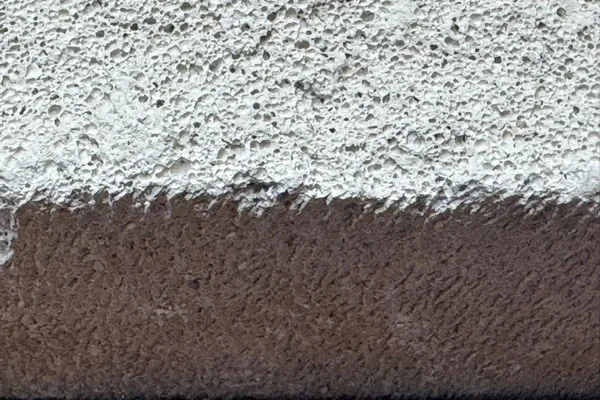
Inside a Structured Carbon RAAC survey
A RAAC survey has three jobs: confirm whether RAAC is present, record the condition of every panel, and gather the measurements an engineer needs to assess it. We do all three in one visit where access allows. Non-destructive scanning identifies RAAC and the position of its reinforcement without cutting into the roof, and a panel-by-panel inspection records bearings, cracking, deflection, moisture and past repairs against a location plan.
The report goes straight to John Staves (CEng FIStructE, MIoD), a chartered structural engineer and one of the UK's leading specialists in RAAC, so the survey is planned around the questions his assessment has to answer rather than around a generic checklist.
Who asks us for RAAC surveys in Slough
A RAAC survey is usually prompted by one of four things: guidance from the Department for Education, NHS or a professional body; an insurer, lender or purchaser asking for confirmation; a planned refurbishment or extension; or something visible, such as a sagging ceiling, cracking or water staining, that has made someone nervous. All four are good reasons. For a building of the right age in Slough, the cost of not knowing is far higher than the cost of the survey.
School, academy, NHS and council RAAC surveys in Slough
Most RAAC surveys we are asked for in Slough come from four places: schools and academy trusts working to Department for Education guidance, NHS and primary care estates teams, council property departments, and the owners of halls, churches, sports centres and offices with flat roofs from the 1950s to the mid 1990s. Each gets the same two-part offer. A visual survey, from £395, identifies and records the RAAC. An engineering inspection and structural assessment, priced per building, classifies every panel and tells you what to do, signed by a Fellow of the Institution of Structural Engineers.
For a school or academy trust that needs a RAAC surveyor who can also provide a management and remediation strategy after the inspection, that is what the two-part offer is for.
RAAC in Slough
Around 166,900 people live in Slough, the Slough Trading Estate, the largest privately owned industrial estate in Europe, plus Elizabeth line stations and a town centre in wholesale redevelopment. It falls under Slough Borough Council, and it carries post-war schools, industrial sheds and civic buildings built at pace through the 1950s to 1980s. Pippins School, a primary school in Slough on the Department for Education published RAAC list, so RAAC is not a theoretical risk here. If a building in Slough has a flat roof and dates from the 1950s to the mid 1990s, RAAC should be ruled in or out rather than assumed absent.
Prioritising buildings in Slough
Not every building in Slough needs a RAAC survey, and we would rather tell you that than sell you one. The ones that do are flat-roofed, date from the 1950s to the mid 1990s, and have never had RAAC confirmed or excluded by scanning. Under Slough Borough Council that generally means post-war schools, industrial sheds and civic buildings built at pace through the 1950s to 1980s. Ranked by occupancy and by the consequence of a failure, that list usually puts schools, health buildings and places of assembly first, then offices and industrial units.
From survey to decision
A survey on its own does not tell you what to do. That is the job of the RAAC assessment, carried out by John Staves (CEng FIStructE, MIoD), a chartered structural engineer and one of the UK's leading specialists in RAAC from our survey findings. The assessment sets out which panels are safe to keep in use, which need propping or monitoring, and whether strengthening in place is a realistic alternative to replacing the roof. Across the RAAC tenders we cost, a bespoke CFRP scheme engineered for that exact roof frequently comes in at well below 15 per cent of the cost of full replacement. On one tender, a roof costed at around £40 million to replace was priced for strengthening at under £4 million.
Because survey, assessment, design, manufacture, installation and monitoring all sit inside one partnership, nothing is lost between stages and nobody is selling you a replacement roof you may not need.
The practical questions, answered
How soon: we can usually be on site in Berkshire within one to two days. How long: the report follows within five working days of the site visit, depending on the size of the survey and the level of detail required. When: evening, weekend and holiday visits are no problem. With what: GSSI Flex NX and GSSI StructureScan Mini ground penetrating radar, Proceq GP8800 and GP8100 radar, the Proceq Pundit PD8050 ultrasonic tomograph, and other electromagnetic and ultrasonic NDT instruments. How much experience: we have surveyed thousands of square metres of RAAC. Insured: professional indemnity insurance is held to a maximum of £10 million, with public and employers' liability arranged on a per-site basis. Where: Berkshire, Hampshire, Surrey, Oxfordshire and Buckinghamshire are local to us, and we work across the UK, and Slough is on our doorstep.
Two named specialists, one team
Neil Smuts, MCIOB MInstNDT FRCSP
Survey, scanning and monitoring. President, UK Concrete Scanning StandardNeil leads the survey, scanning and monitoring side of every Structured Carbon project. He is President of the UK Concrete Scanning Standard, a member of the Chartered Institute of Building and the Institute of NDT, and a Fellow of the Register of Concrete Scanning Professionals. LinkedIn
John Staves, CEng FIStructE MIoD
Structural assessment and CFRP designJohn is a chartered structural engineer and one of the UK's leading specialists in RAAC. He carries out the structural assessment and designs every strengthening scheme. John received both the Regional and the National Innovation Award at the HSBC Commercial Banking and Federation of Small Businesses Small Business Growth Awards for his work on RAAC repair. LinkedIn
Thank you, we have your enquiry
One of the team will come back to you within one working day. If it is urgent, call +44 118 430 8430.
RAAC survey FAQs
How quickly can you get to Slough?
We are based in Finchampstead, Wokingham, so we can usually be on site in Berkshire within one to two days. Evening, weekend and holiday visits are no problem.
Do you need to open up the roof?
No. We confirm RAAC and locate its reinforcement using non-destructive scanning from the underside or the roof surface. Where a small opening is already present we will use it, but the survey does not depend on cutting into the building.
What equipment do you use?
GSSI Flex NX and GSSI StructureScan Mini ground penetrating radar, Proceq GP8800 and GP8100 radar, the Proceq Pundit PD8050 ultrasonic tomograph, and other electromagnetic and ultrasonic NDT instruments. We have surveyed thousands of square metres of RAAC with them.
Are you insured?
Professional indemnity insurance is held to a maximum of £10 million, with public and employers' liability arranged on a per-site basis.
Can the building stay open during the survey?
Yes. The survey is quiet, non-destructive work carried out room by room. Schools in Slough usually ask us to work around the timetable or in holidays; health and office buildings carry on around us. Neil is DBS checked.
What does the report contain?
A panel-by-panel record of what was found: whether the panel is RAAC, its condition, bearing details, cracking, deflection, moisture, previous repairs, all referenced to a location plan with photographs. It is written for a structural engineer to assess from.
Who assesses the findings?
John Staves (CEng FIStructE, MIoD), a chartered structural engineer and one of the UK's leading specialists in RAAC, carries out the structural assessment. The survey is designed around what he needs, which is why the two stages work as one.
Also in Slough
RAAC assessment in Slough
RAAC structural assessment in Slough, Berkshire, by John Staves CEng FIStructE MIoD, working from Neil Smuts' survey.
RAAC assessment in SloughRAAC scanning in Slough
RAAC scanning in Slough, Berkshire: non-destructive identification of RAAC planks and their reinforcement by Neil Smuts, President of the UK Concrete Scanning Standard.
RAAC scanning in SloughRAAC survey near Slough
- RAAC survey Datchet
- RAAC survey Reading
- RAAC survey Bracknell
- RAAC survey Maidenhead
- RAAC survey Wokingham
- RAAC survey Newbury
- All Berkshire towns
Related: RAAC strengthening, RAAC remediation in Berkshire, RAAC confirmed buildings register, RAAC in schools.