
RAAC Scanning in Binfield
Structured Carbon provides non-destructive RAAC scanning in Binfield and throughout Berkshire. The work is led by Neil Smuts (MCIOB, MInstNDT, FRCSP), President of the UK Concrete Scanning Standard and a Fellow of the Register of Concrete Scanning Professionals, the person who leads the national standard for concrete scanning. The scan confirms RAAC, maps the reinforcement, and gives John Staves (CEng FIStructE, MIoD), a chartered structural engineer and one of the UK's leading specialists in RAAC, the evidence his assessment needs.
- Led by Neil Smuts, President of the UK Concrete Scanning Standard and Fellow of the Register of Concrete Scanning Professionals
- Confirms RAAC and locates its reinforcement without opening up the structure
- Building stays in use; quiet, room-by-room work
- Results feed straight to a chartered RAAC engineer, John Staves CEng FIStructE MIoD
Based in Finchampstead, Wokingham. Binfield is local to us.
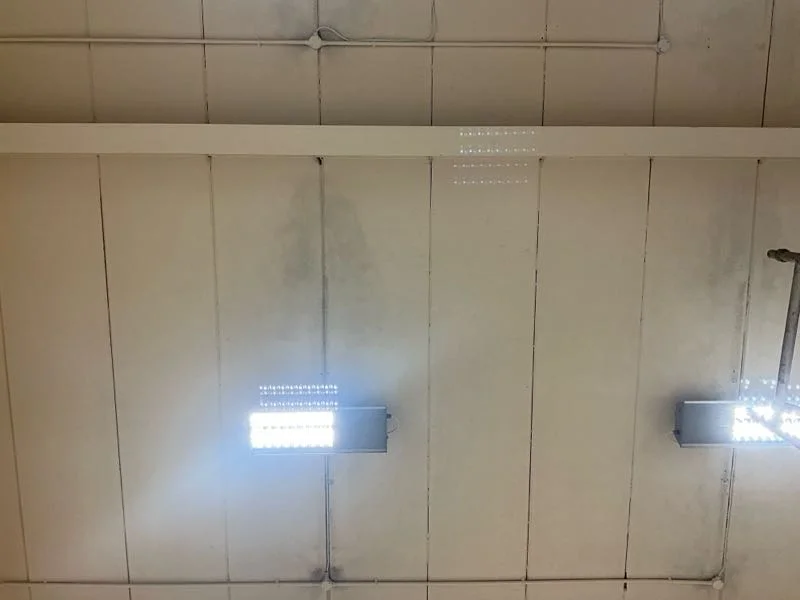
What RAAC scanning in Binfield tells you
Two things cannot be seen from below a ceiling: whether a panel is RAAC at all, and where its reinforcement is. Scanning answers both. It separates RAAC from dense concrete by its internal structure, and it maps the reinforcement in each plank, including whether the bars reach the bearings, which is where RAAC planks are most likely to fail. The results are logged to a location plan for every panel scanned, ready for structural assessment.
Concrete scanning done to a standard
Concrete scanning has a standard in the UK, and the man who leads it leads our scanning. Neil Smuts (MCIOB, MInstNDT, FRCSP), President of the UK Concrete Scanning Standard and a Fellow of the Register of Concrete Scanning Professionals, reads every scan we carry out in Binfield. That is the difference between a printout and an answer: knowing what RAAC looks like on a scan, what a short bearing looks like, and what a previous repair or a void looks like when it is pretending to be one of them. The answer then goes to John Staves (CEng FIStructE, MIoD), a chartered structural engineer and one of the UK's leading specialists in RAAC, whose assessment and, if needed, strengthening design are built on it.
Is it RAAC or ordinary concrete? Identification in Binfield
The most common question from schools, academies, NHS estates and councils in Binfield is the simplest one: is this roof RAAC or ordinary concrete? From below they can look identical. Ground penetrating radar and ultrasonic scanning settle it in minutes per panel, because RAAC's light cellular structure and its reinforcement pattern read very differently from dense concrete. The same scan locates the reinforcement and checks whether it reaches the bearings, the single most important fact about a RAAC plank. Scanning is included in our visual survey, from £395, and in every engineering inspection.
Where RAAC hides in Binfield
Binfield is a village on the edge of Bracknell now absorbing the Blue Mountain and Amen Corner developments. With around 4,900 residents in the Bracknell Forest Council area, it has village schools and halls alongside large new housing. Frimley Park Hospital, which serves this part of Berkshire, is a publicly identified RAAC hospital and is being replaced under the New Hospital Programme, which has put RAAC on the agenda for every estates team in the area. Buildings of that period are exactly where RAAC turns up: flat or low-pitched roofs, sometimes floors and walls, in schools, halls, health buildings, sports centres and offices built between the 1950s and the mid 1990s.
RAAC scanning: how to get started in Binfield
Three pieces of information get a RAAC scanning in Binfield moving: the age of the building, the type of roof, and any drawings or previous reports you hold. With those we can say whether the building is a realistic RAAC candidate, what the visit would involve, and how long it would take. For estates spread across Binfield, Bracknell and Wokingham, we plan the visits as one programme so that nothing is missed and nothing is surveyed twice.
What comes next
On its own, a scan tells you what the panel is. Combined with a condition survey and a structural assessment, it tells you what to do. Most clients in Binfield ask for the full RAAC survey, with scanning built in, followed by the assessment by John Staves (CEng FIStructE, MIoD), a chartered structural engineer and one of the UK's leading specialists in RAAC. Where the assessment supports strengthening rather than replacement, the same team designs, manufactures, installs and monitors it. Across the RAAC tenders we cost, a bespoke CFRP scheme engineered for that exact roof frequently comes in at well below 15 per cent of the cost of full replacement. On one tender, a roof costed at around £40 million to replace was priced for strengthening at under £4 million.
What we bring to Binfield
We have surveyed thousands of square metres of RAAC, using GSSI Flex NX and GSSI StructureScan Mini ground penetrating radar, Proceq GP8800 and GP8100 radar, the Proceq Pundit PD8050 ultrasonic tomograph, and other electromagnetic and ultrasonic NDT instruments. We can usually be on site in Berkshire within one to two days, evening, weekend and holiday visits are no problem, and the report follows within five working days of the site visit, depending on the size of the survey and the level of detail required. Professional indemnity insurance is held to a maximum of £10 million, with public and employers' liability arranged on a per-site basis.
Two named specialists, one team
Neil Smuts, MCIOB MInstNDT FRCSP
Survey, scanning and monitoring. President, UK Concrete Scanning StandardNeil leads the survey, scanning and monitoring side of every Structured Carbon project. He is President of the UK Concrete Scanning Standard, a member of the Chartered Institute of Building and the Institute of NDT, and a Fellow of the Register of Concrete Scanning Professionals. LinkedIn
John Staves, CEng FIStructE MIoD
Structural assessment and CFRP designJohn is a chartered structural engineer and one of the UK's leading specialists in RAAC. He carries out the structural assessment and designs every strengthening scheme. John received both the Regional and the National Innovation Award at the HSBC Commercial Banking and Federation of Small Businesses Small Business Growth Awards for his work on RAAC repair. LinkedIn
Thank you, we have your enquiry
One of the team will come back to you within one working day. If it is urgent, call +44 118 430 8430.
RAAC scanning FAQs
Can scanning tell RAAC from ordinary concrete?
Yes. RAAC has a light, cellular internal structure that reads very differently from dense reinforced concrete. That difference, plus the reinforcement pattern, is how a scan confirms the material.
Does the scan show where the reinforcement is?
Yes. Locating the reinforcement, including whether it extends to the bearings, is the main reason to scan RAAC. Bearing length is the single most important factor in how a RAAC plank behaves.
Do you scan the whole roof?
We scan every accessible panel that could be RAAC, recorded to a location plan. For a large estate in Binfield we agree the scope with you first, but the principle is that unscanned panels are unknown panels.
Who interprets the results?
Neil Smuts (MCIOB, MInstNDT, FRCSP), President of the UK Concrete Scanning Standard and a Fellow of the Register of Concrete Scanning Professionals, leads and reads every scan. The results go to John Staves (CEng FIStructE, MIoD), a chartered structural engineer and one of the UK's leading specialists in RAAC, for structural assessment.
Can you scan a school in Binfield during term?
Yes. Scanning is quiet, room-by-room work. We plan it around the timetable or use holidays and out-of-hours periods where a school prefers.
Is scanning enough on its own?
It confirms the material and maps the reinforcement. To know what condition the panels are in and what to do, you need the condition survey and a structural assessment as well. We offer all three together as a RAAC survey in Binfield.
What areas do you cover?
We are based in Finchampstead, Wokingham, so Binfield is on our doorstep. Berkshire, Hampshire, Surrey, Oxfordshire and Buckinghamshire are local to us, and we scan RAAC across the UK.
Also in Binfield
RAAC survey in Binfield
RAAC survey in Binfield, Berkshire, by Neil Smuts MCIOB MInstNDT FRCSP, President of the UK Concrete Scanning Standard.
RAAC survey in BinfieldRAAC assessment in Binfield
RAAC structural assessment in Binfield, Berkshire, by John Staves CEng FIStructE MIoD, working from Neil Smuts' survey.
RAAC assessment in BinfieldRAAC scanning near Binfield
- RAAC scanning Bracknell
- RAAC scanning Wokingham
- RAAC scanning Reading
- RAAC scanning Slough
- RAAC scanning Maidenhead
- RAAC scanning Newbury
- All Berkshire towns
Related: RAAC strengthening, RAAC remediation in Berkshire, RAAC confirmed buildings register, RAAC in schools.