
RAAC removal: what it involves, and what to price first
Removing RAAC means taking out the planks and building a new roof, floor or wall in their place. Sometimes it is the right answer. Before you commit to it, it is worth knowing exactly what it involves and what keeping and strengthening the same planks would cost.
- Survey first, so you know what you are removing
- Strengthening priced as the alternative
- Assessments signed by a Chartered Engineer and Fellow of the Institution of Structural Engineers.
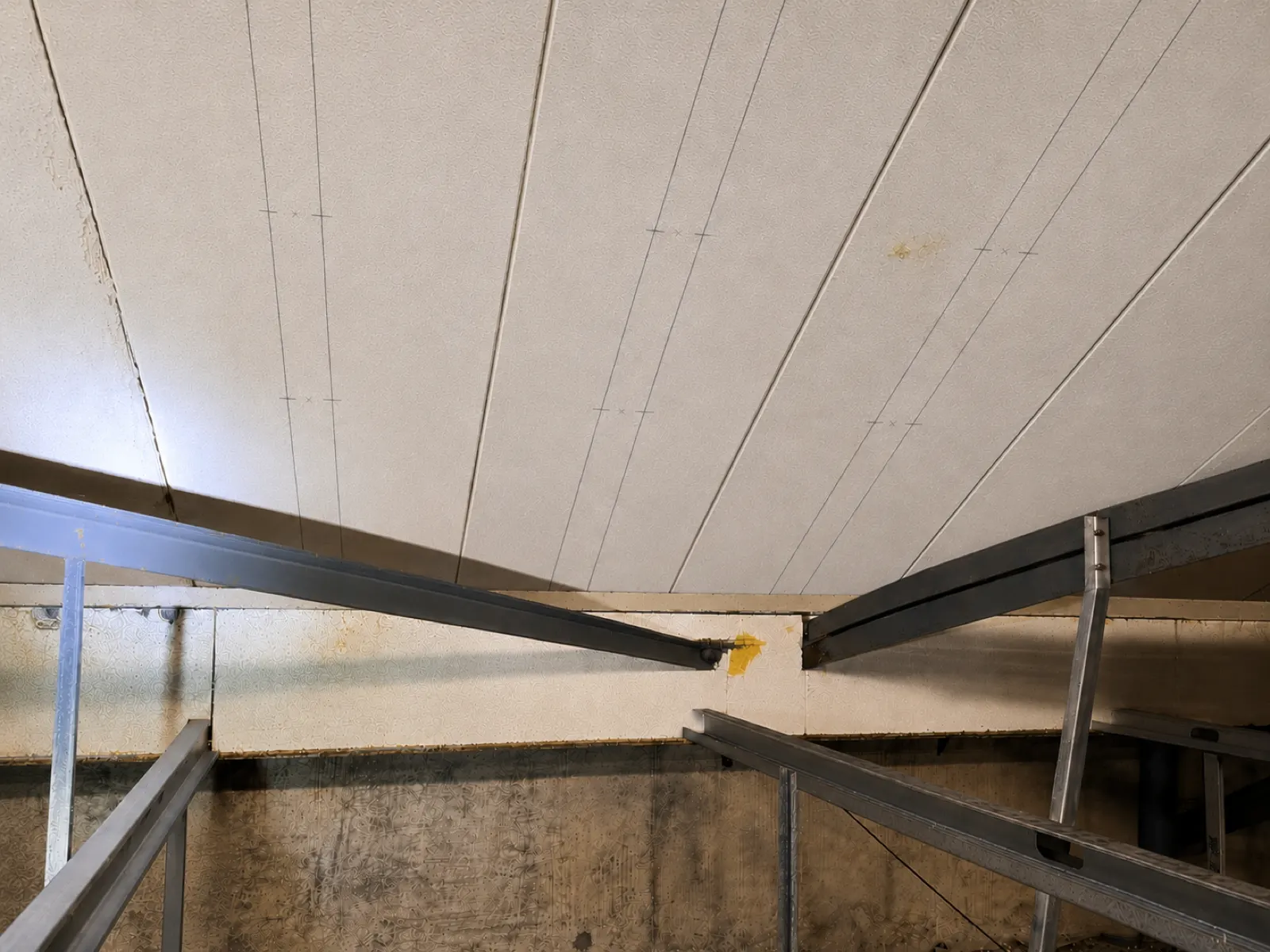
What RAAC removal involves
- Make safe. Areas at risk are propped or closed off under the advice of a structural engineer.
- Decant. The people who use the space move out, often into temporary accommodation, for the length of the works.
- Strip out. Roof coverings, insulation, ceilings and services are removed so the planks can be taken out.
- Remove the planks. The RAAC is cut out and taken away, usually with cranage and the roof open to the weather.
- Build the new structure. A new deck is designed and built, then waterproofed, insulated and finished, and services are reinstated.
- Move back in. Only once the new roof is complete.
When removal is the right answer
Some planks are beyond strengthening, and some buildings are being rebuilt for other reasons. A survey and assessment tells you which planks those are, so removal can be limited to the planks that need it rather than the whole roof.
The alternative: keep the planks and strengthen them
Where the assessment shows planks can be kept, they can be strengthened in place with bespoke CFRP while the building stays open. No decant, no strip-out, no new roof. Across the RAAC tenders we cost, a bespoke CFRP scheme engineered for that exact roof frequently comes in at well below 15 per cent of the cost of full replacement. On one tender, a roof costed at around £40 million to replace was priced for strengthening at under £4 million.
That is why we recommend pricing strengthening before committing to removal. If removal is still the right route, you will know it is for the right reasons.
RAAC removal in schools
For schools, removal usually means moving classes into temporary classrooms for the works. Strengthening is planned around the school year, with work in holidays and out of hours, so classrooms stay in use. RAAC in schools.
RAAC removal,answered
Does RAAC have to be removed?
How much does RAAC removal cost?
Can you remove only some of the planks?
How long does removal take compared with strengthening?
Talk tothe people who do the work
Tell us what you know about the building and what has been found so far. A RAAC surveyor and a chartered structural engineer read every enquiry.
- Phone+44 118 430 8430
- Email[email protected]
- Base6 Ivanhoe Road, Hogwood Industrial Estate, Finchampstead, Wokingham, RG40 4QQ
Thank you, that is with us.
We reply within one working day. If it is urgent, call +44 118 430 8430.