
RAAC: what reinforced autoclaved aerated concrete is, and what to do about it
RAAC is reinforced autoclaved aerated concrete, a lightweight, bubbly form of concrete made into planks and used in flat roofs, floors and walls in the UK from the 1950s to the 1990s. It is found in schools, hospitals, universities, offices, public buildings and some homes.
- What RAAC is and how it was made
- Why it is a concern
- How to identify it and what to do
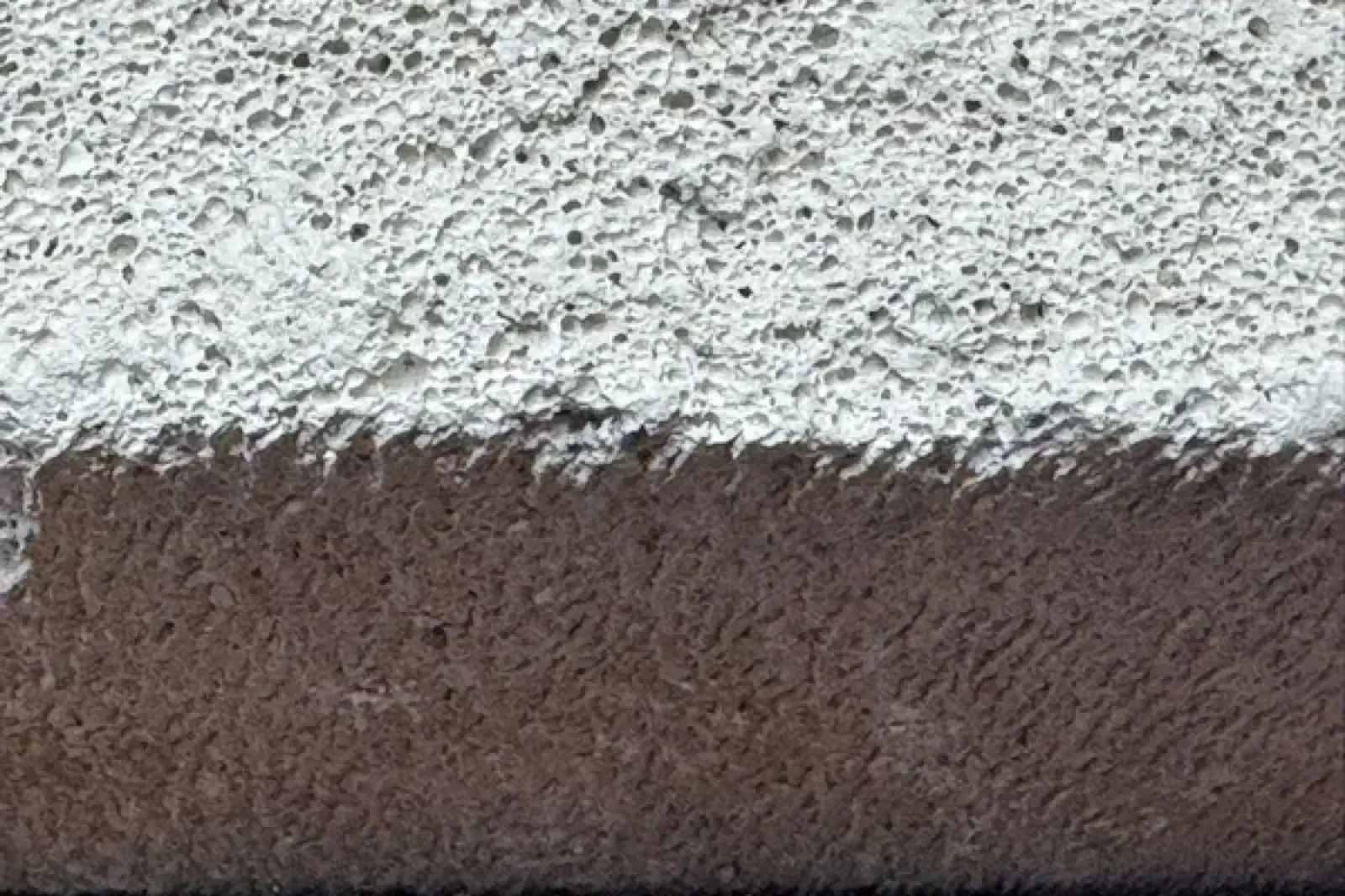
What RAAC is
Reinforced autoclaved aerated concrete is made without coarse aggregate. A mix of fine material is aerated so it fills with small bubbles, then cured under heat and pressure in an autoclave. The result is light and insulating, and it was reinforced with steel bars and made into planks, usually for flat roofs.
Where and when it was used
RAAC was used in UK construction from the 1950s to the 1990s, mainly in flat roofs, and sometimes in floors and walls. Schools, hospitals, universities, courts, theatres, offices and some housing all used it.
Why RAAC is a concern
- It has a low compressive strength, around 10 to 20 per cent of traditional concrete.
- It is porous. Water ingress weakens it, adds weight and corrodes the reinforcement.
- It deflects more than ordinary concrete.
- Planks have been cut for roof lights and services, and roofs have been loaded with plant they were not designed for.
- Planks were given an estimated service life of around 30 years, and many are now well beyond it.
None of that means every RAAC roof is unsafe. Every roof is different, and the answer for a particular building comes from surveying and assessing it, not from assuming the worst about the material.
How to identify RAAC
From below, RAAC planks often have a smooth, light grey or white soffit with visible joints between planks, usually about 600 mm apart. Broken or exposed RAAC looks bubbly, like an Aero bar, with no stones in it. A visual survey confirms it, and scanning maps every plank and its reinforcement. RAAC surveys.
What to do if you find RAAC
- If there is any sign of distress, keep people out of the area and get advice from a structural engineer.
- Have it surveyed and assessed, plank by plank, against the current IStructE RAAC guidance.
- Keep water out: gutters, drains and the roof covering matter.
- Price the options, including strengthening the planks in place as well as replacement.
Source for the material facts above: the MoD Defence Infrastructure Organisation safety alert on RAAC planks (2023).
RAAC,answered
What does RAAC stand for?
What does RAAC concrete look like?
Is RAAC dangerous?
When was RAAC used?
Talk tothe people who do the work
Tell us what you know about the building and what has been found so far. A RAAC surveyor and a chartered structural engineer read every enquiry.
- Phone+44 118 430 8430
- Email[email protected]
- Base6 Ivanhoe Road, Hogwood Industrial Estate, Finchampstead, Wokingham, RG40 4QQ
Thank you, that is with us.
We reply within one working day. If it is urgent, call +44 118 430 8430.