
RAAC shear: the question is at what load
Every material fails in shear if you apply enough force. Steel does, timber does, lead does. Saying RAAC "fails in shear" tells you nothing until you know the load it takes to do it. In our own shear testing, we have never seen RAAC fail in shear under normal working loads.
- Our own shear tests on RAAC
- Flexure and condition assessed plank by plank
- CFRP tailored to each roof and plank type
- Signed by a Chartered Engineer and Fellow of the IStructE
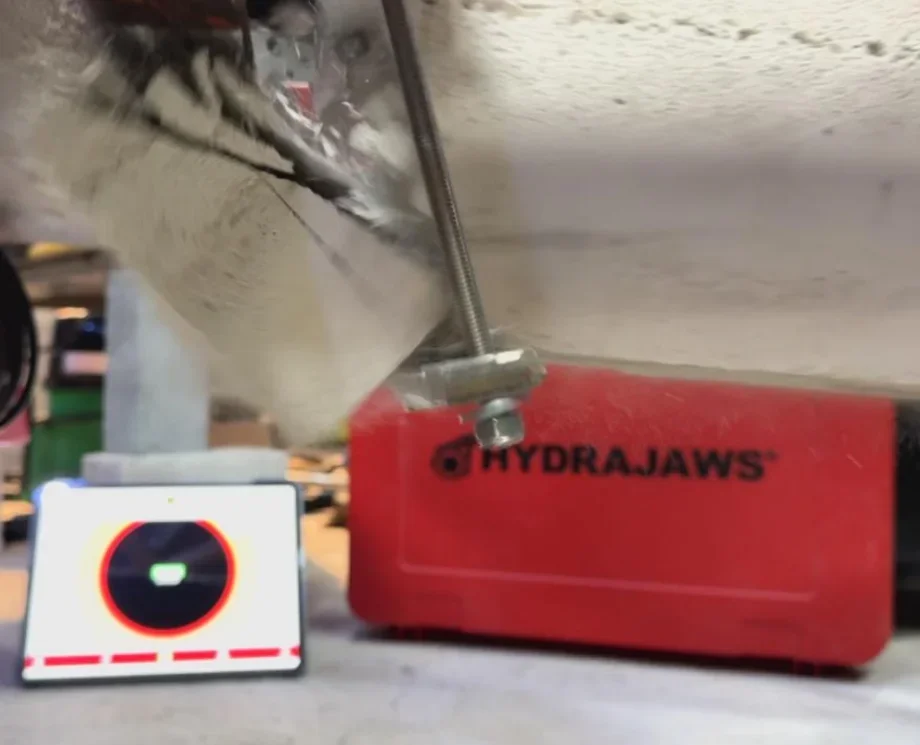
A shear test on a section of RAAC cut alongside the reinforcement bars, in our lab.
Shear is a force, not a label
Shear failure is not a property a material has or does not have. It is what happens when the shear force on a section exceeds what that section can carry. Every material has that limit. The engineering question for a RAAC roof is the same as for any other structure: what load does it carry in service, and how does that compare with the load it can take?
That is why a statement that RAAC "fails in shear" is not useful on its own. Without the force involved, and without comparing it with the working load on the roof, it cannot tell an estates manager whether a plank is safe or what it needs.
What our testing shows
We have carried out our own shear tests on RAAC. Under normal working loads we have never observed RAAC failing in shear. We are very aware of the flexural issues RAAC can have, and that is where our assessments and our designs concentrate.
Every roof is unique
As with any engineering question, the answer depends on the roof. We are not saying that no RAAC plank can ever fail in shear, and we are not saying that every plank does. Treating every RAAC plank as a shear failure waiting to happen condemns an entire group of materials by default, and that is not engineering. Each roof, and each plank type within it, is assessed on its own evidence and designed for on its own merits.
The real risks in a RAAC roof
- Flexure and deflection across the span.
- Water, which weakens the aerated concrete, adds weight and corrodes the reinforcement.
- Condition: cracking, spalling and corrosion.
- Bearings that are short or damaged.
- Planks that have been cut for roof lights and services, or loaded with plant they were never designed to carry.
We survey and measure all of these, plank by plank, and assess the findings against the current IStructE RAAC guidance. Every assessment is signed by a Chartered Engineer and Fellow of the Institution of Structural Engineers.
Why more strength is not the answer
It is tempting to treat RAAC as a material that simply needs more strength added. That is the wrong approach, and it can be a dangerous one. Aerated concrete has a low compressive strength. Keep adding strength to the tension face of a plank and the weak point moves into compression. A plank that has been over-strengthened is not a safer plank.
The right amount of strengthening is the amount that particular plank needs. That is why we tailor make every CFRP solution for each roof and each plank type, designed by John Staves and manufactured in the UK to that design. Ours is the UK's first CFRP system designed specifically for RAAC, insurer approved and extensively tested.
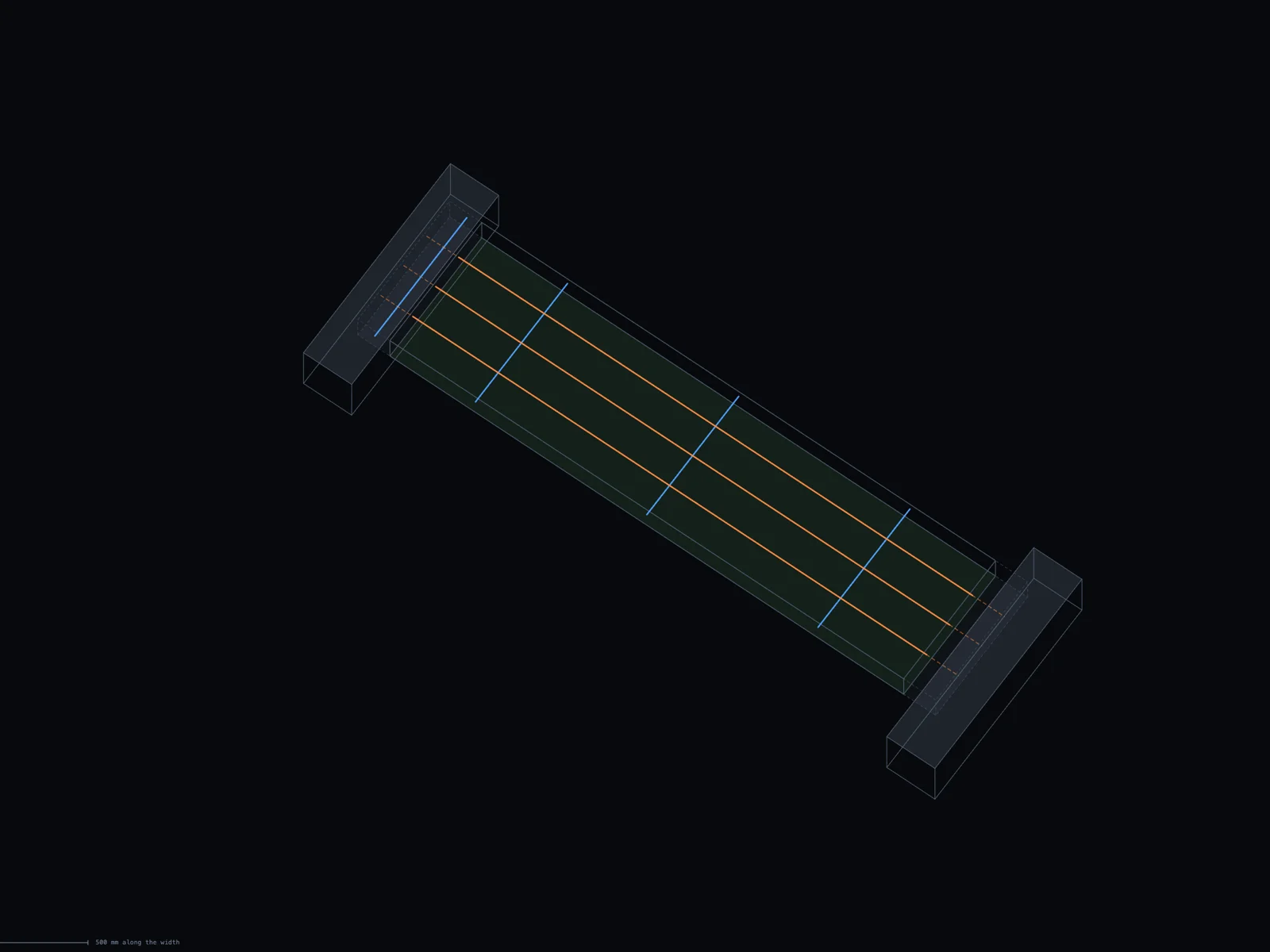
SC Viewer: plank layout, shown with the viewer's example plank.
Know the plankbefore you design
Our software turns the radar scan into a plank by plank layout: the bars, their positions and the bearings at each end. The CFRP design starts from that layout, not from a standard product.
CFRP strengtheningRAAC shear,answered
Do RAAC planks fail in shear?
Why is "RAAC fails in shear" not enough on its own?
What are the real risks in a RAAC roof?
Can you make a RAAC plank too strong?
How is your CFRP different?
Do you still check the bearings?
Talk to the engineerwho designs it
Tell us what you know about the building and what has been found so far. A RAAC surveyor and a chartered structural engineer read every enquiry.
- Phone+44 118 430 8430
- Email[email protected]
- Base6 Ivanhoe Road, Hogwood Industrial Estate, Finchampstead, Wokingham, RG40 4QQ
Thank you, that is with us.
We reply within one working day. If it is urgent, call +44 118 430 8430.