
RAAC structural repairs and RAAC repairs, designed for your roof
Structured Carbon designed and makes the UK's first CFRP system designed specifically for RAAC, insurer approved and extensively tested. A RAAC roof does not need a standard product. It needs a repair designed for the planks you actually have: how they were made, how they are supported, what condition they are in and what they carry. That starts with a survey and an engineer's assessment, and it ends with a scheme made for that roof.
- The UK's first CFRP system designed specifically for RAAC
- Survey and assessment first, repair designed per plank
- Signed by a Chartered Engineer and Fellow of the Institution of Structural Engineers.
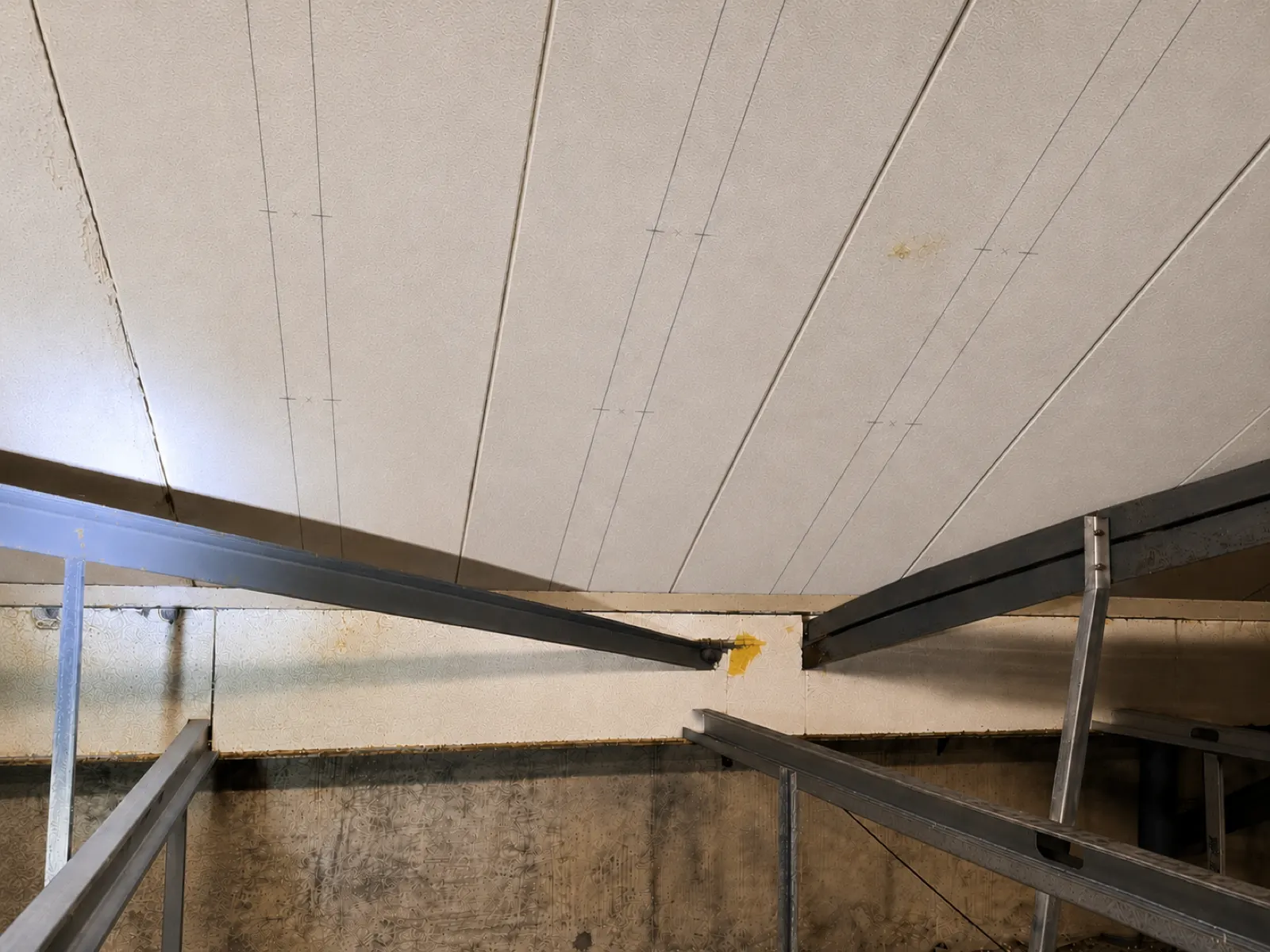
What a RAAC structural repair involves
Every RAAC repair follows the same order. Find out what is there, assess it, then design the repair for what the assessment shows. Skipping to the repair is how roofs end up with the wrong fix.
- Survey. Confirm RAAC is present, map every plank and record its condition. The building stays in use. RAAC surveys.
- Assessment. Each plank is assessed against the current IStructE RAAC guidance and given a risk category and the action it needs. Every assessment is signed by a Chartered Engineer and Fellow of the Institution of Structural Engineers.
- Design. Where planks can be kept, the strengthening is designed by John Staves to the capacity each plank needs, no more and no less.
- Manufacture and install. Bespoke CFRP made in the UK to the design, installed with evening, weekend and holiday working where needed.
- Monitor. Instrumented monitoring, so the roof's performance is known rather than assumed.
RAAC repair methods compared
- CFRP strengthening. Carbon fibre reinforced polymer bonded to the planks to give them the capacity the assessment shows they need. Ours is the UK's first CFRP system designed specifically for RAAC, insurer approved and extensively tested. Carbon fibre reinforcement for RAAC.
- Steel plate strengthening. Steel added to the planks or their supports. Heavier than carbon fibre, and it has to be protected from corrosion. Steel plate strengthening for RAAC panels.
- Epoxy resin methods. Resin injection and bonding for cracks and local defects, usually alongside strengthening rather than instead of it. Epoxy resin methods for RAAC repair.
- Bearing repairs. Where a support is short or damaged, the support itself is dealt with.
- Temporary propping. Where a plank needs it now, propping makes the area safe while the permanent repair is designed. Temporary structural repairs.
- Replacement of individual planks. Some planks are beyond strengthening. The assessment says which, so only those are replaced.
- Keeping water out. Water weakens RAAC, adds weight and corrodes the reinforcement. A sound roof covering and drainage are part of every repair. Repair with mitigation measures.
Why more strength is not a better repair
Adding strength that a plank does not need is not a safer repair. Aerated concrete has a low compressive strength, and over-strengthening the tension face moves the weak point into compression. That is why we tailor make every CFRP solution for each roof and plank type rather than applying one product to every roof. Why RAAC shear is a question of load.
What it costs compared with replacement
Across the RAAC tenders we cost, a bespoke CFRP scheme engineered for that exact roof frequently comes in at well below 15 per cent of the cost of full replacement. On one tender, a roof costed at around £40 million to replace was priced for strengthening at under £4 million. Every building is priced from its own survey. Cost of structural repairs compared with replacement.
RAAC remediation and RAAC repairs: the difference
RAAC remediation is the whole plan for a RAAC building: survey, assessment, management, repair, strengthening or replacement. RAAC repairs are the physical work on the planks within that plan. RAAC remediation.
RAAC repair guides
In-depth guides to every part of a RAAC structural repair, written by the team that surveys, designs and strengthens RAAC.
- How engineers design structural repairs for RAAC
- Carbon fibre reinforcement for RAAC structural repair
- Steel plate strengthening for RAAC panels
- Epoxy resin methods for RAAC repair
- Temporary structural repairs while awaiting replacement
- Combining structural repair with mitigation measures
- Durability of RAAC structural repair solutions
- How long do RAAC repairs last?
- Risks of poorly executed RAAC structural repairs
- Standards and guidance on RAAC structural repair
- Cost of structural repairs compared with replacement
- RAAC repair in hospitals and NHS trust buildings
- The future of RAAC structural repair methods
RAAC repairs,answered
Can RAAC be repaired rather than replaced?
What is the best repair for RAAC?
Who made the UK's first CFRP system designed specifically for RAAC?
Who designs the repair?
Do we have to close the building?
How long does a RAAC repair last?
Relatedguides
RAAC survey
Find out whether RAAC is there, where every plank is and what condition it is in.
Read moreRAAC strengthening
Bespoke CFRP that strengthens RAAC in place while the building stays open.
Read moreRAAC shear
Every material fails in shear under enough force. The question is at what load.
Read moreTalk tothe people who do the work
Tell us what you know about the building and what has been found so far. A RAAC surveyor and a chartered structural engineer read every enquiry.
- Phone+44 118 430 8430
- Email[email protected]
- Base6 Ivanhoe Road, Hogwood Industrial Estate, Finchampstead, Wokingham, RG40 4QQ
Thank you, that is with us.
We reply within one working day. If it is urgent, call +44 118 430 8430.